 Comparison
Phantom Sound Alternatives for Home Audio Systems
Table of Contents
- What Is a Phantom Sound Alternative for Audio Systems
- Devialet Phantom Alternatives: Premium Wireless Speaker Options
- Speakers to Replace Devialet Phantom: Comparing Wireless and Stereo Models
- Stereo Speaker System for Home: Traditional Two-Channel Audio
- Whole-Home Audio System: Multi-Room Setup and Integration
- How to Choose the Right Phantom Sound Alternative for Your Space
- Small rooms and desktop listening (under ~150 sq ft)
- Medium living rooms (~150-350 sq ft)
- Large or open-plan rooms (350+ sq ft, high ceilings)
- Home theater and immersive listening
- Whole-home and multi-room coverage
- Total system cost, not just speaker price
- Upgrade paths and long-term ownership
- Room size and existing equipment
- Professional Installation and System Configuration
- Frequently Asked Questions
Last Updated: October 16, 2026
What Is a Phantom Sound Alternative for Audio Systems
A phantom sound alternative is any audio solution that replaces or competes with premium wireless speakers like the Devialet Phantom. The term "phantom sound" describes the centered, three-dimensional audio image that appears between two properly positioned speakers.
The Devialet Phantom is synonymous with premium wireless audio, but many homeowners need a different configuration: a stereo system for a dedicated listening room, whole-home audio, or wireless convenience over audiophile detail.
The choice between a single premium wireless speaker, a stereo pair, or a distributed multi-room system depends on your space, priorities, and how you use audio.
Devialet Phantom Alternatives: Premium Wireless Speaker Options
If you're drawn to the Devialet Phantom's all-in-one convenience and aesthetic, several premium wireless speakers deliver comparable performance for less. The shortlist below is organized by budget tier.
Entry premium tier (roughly $500-$900 per speaker)
The Bluesound PULSE 2i suits listeners who want wireless flexibility with high-resolution audio. It handles multi-room streaming, supports hi-res playback, and integrates with existing systems if you expand later, ideal for living rooms and secondary rooms.
The Sonos Era 300 is the other strong entry-premium pick. Its six-driver array projects sound in multiple directions, producing a wider image than a conventional forward-firing bookshelf speaker, closer to the Phantom's omnidirectional character.
Mid premium tier (roughly $1,000-$2,500 per speaker)
The Cambridge Audio Evo One offers exceptional value among high-end wireless speakers, combining wireless convenience with build quality and sound character audiophiles appreciate. Its all-in-one format mirrors the Phantom's plug-and-play appeal.
The KEF LSX II is the compact alternative: a true two-box stereo pair rather than a single cabinet, so it delivers genuine stereo imaging instead of a simulated wide image. For a desk, den, or small living room, that separation is the biggest upgrade over a one-box speaker.
Flagship tier (roughly $3,000+ per speaker)
The KEF LS60 Wireless bridges the wireless and hi-fi worlds with a true stereo system in a modern, cable-light package. Designed for serious listeners who don't want visible cables, it delivers the soundstage, detail, and bass response that separate casual listening from engaging music.
The Bowers & Wilkins Zeppelin is the flagship one-box alternative. Its integrated subwoofer and dedicated midrange and tweeter drivers give it more low-frequency authority than most single-cabinet speakers, where one-box designs usually fall short against the Phantom.
How the tiers compare
| Option | Approx. price (per unit) | Format | Best for | Setup complexity |
|---|---|---|---|---|
| Bluesound PULSE 2i | ~$600 | Single cabinet | Multi-room, hi-res streaming | Low |
| Sonos Era 300 | ~$450 | Single cabinet, multi-driver | Spatial/immersive listening | Low |
| Cambridge Audio Evo One | ~$1,500 | Single cabinet, all-in-one | Value-focused audiophiles | Low |
| KEF LSX II | ~$1,400/pair | Two-box stereo pair | Desktops, small rooms | Low-Medium |
| KEF LS60 Wireless | ~$7,000/pair | Two-box floorstanding | Dedicated listening rooms | Medium |
| Bowers & Wilkins Zeppelin | ~$800 | Single cabinet, integrated sub | One-box bass authority | Low |
Prices reflect typical U.S. street pricing and move with promotions, so confirm current figures before buying.
What the specs actually tell you
Two numbers matter most when comparing these to a Phantom. First, low-frequency extension, a speaker rated to roughly 40 Hz reproduces most music convincingly; one rolling off at 60 Hz sounds thin on bass-heavy tracks and benefits from a subwoofer. Second, maximum output in decibels, a single-cabinet speaker topping out around 100 dB is fine for a bedroom but strains in a large open living room. A two-box stereo pair plays louder with less distortion.
The flexibility trade-off
All of these share the Phantom's wireless convenience and modern design. The key difference is flexibility: two-box options (LSX II, LS60) integrate more easily into a larger system as your needs grow, add a subwoofer, swap a source, or reposition each cabinet independently. Single-cabinet designs lock you into their built-in amplification and acoustic design.
Speakers to Replace Devialet Phantom: Comparing Wireless and Stereo Models
Comparing wireless speakers to traditional stereo systems means comparing two philosophies: wireless prioritizes convenience, while stereo prioritizes sound quality.
The KEF LS60 Wireless bridges this gap with a true hi-fi system in a modern, wireless package, a complete stereo system for serious listeners who don't want visible cables.
For comparison, here's how these options stack up:
| Option | Best For | Audio Priority | Setup Complexity |
|---|---|---|---|
| Devialet Phantom | Compact spaces, style-first buyers | Balanced | Minimal |
| Bluesound PULSE 2i | Multi-room audio, high-res streaming | Flexibility | Low |
| Cambridge Audio Evo One | Budget-conscious audiophiles | Value | Low |
| KEF LS60 Wireless | Dedicated listening rooms | Sound quality | Medium |
| Traditional stereo pair | Maximum sound quality | Detail and dynamics | Medium-High |
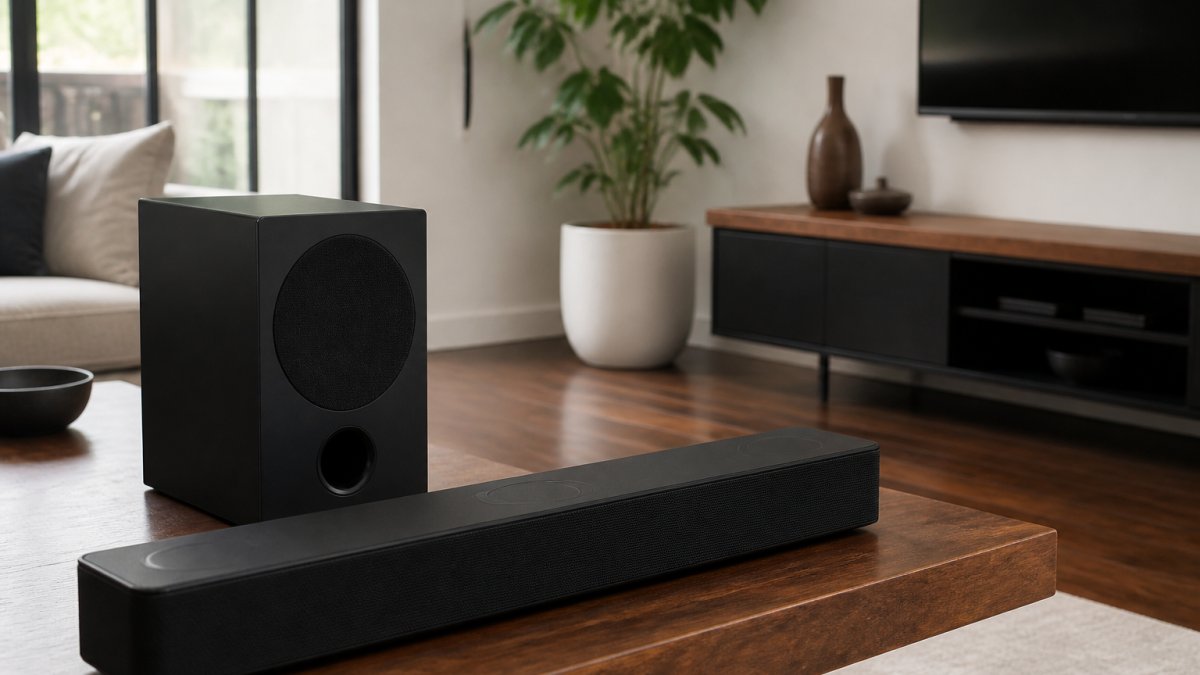
The Vizio 5.1-channel system is a different category entirely: home theater. It creates immersive surround sound for movies and gaming, the right choice for impact and spatial effects rather than stereo's intimate detail.
Stereo Speaker System for Home: Traditional Two-Channel Audio
A traditional stereo speaker system, two matched speakers positioned properly, remains the gold standard for music listening.
This stereo imaging separates a good listening experience from an ordinary one: instruments gain depth and space, vocals appear to come from a single point, and bass feels controlled rather than boomy.
Two-channel stereo systems also scale easily: start with speakers and an amplifier, then add a subwoofer, then a second pair in another room.
The downside is setup complexity: stands or wall mounts, amplification, and proper cable runs.
Whole-Home Audio System: Multi-Room Setup and Integration
A whole-home audio system extends music throughout your house, playing the same song everywhere or different music in different rooms, fundamentally different from a stereo system optimized for one location.
Multi-room systems work through wireless streaming over Wi-Fi or proprietary mesh networks, controlled from your phone and integrated with services like Spotify, Apple Music, or Tidal.
The challenge: multi-room systems rarely match a dedicated stereo pair's sound quality.
Whole-home systems also require reliable, strong Wi-Fi in every room.
How to Choose the Right Phantom Sound Alternative for Your Space
Start by identifying your listening priorities, then route yourself to a system type using the use cases below. Each includes a realistic total-system budget so you compare complete setups, not just speaker prices.
Small rooms and desktop listening (under ~150 sq ft)
A single wireless speaker or a compact two-box pair is the right call. A bedroom, den, or desk doesn't need deep bass extension or high output, a speaker rated to about 50-60 Hz and 90-100 dB will fill the space cleanly. Budget roughly $450-$1,500 for the speaker or pair, plus $0-$200 for a stand or desk mount. The Sonos Era 300 or KEF LSX II fit here.
Medium living rooms (~150-350 sq ft)
This is where a single-cabinet speaker starts to strain and a stereo pair or speaker-plus-subwoofer combo pulls ahead. Budget roughly $1,500-$3,000 for the speakers, plus $400-$800 if you add a subwoofer for low-frequency extension below 40 Hz. The Cambridge Audio Evo One works as a one-box solution; a KEF LSX II pair plus a compact sub is the higher-ceiling option.
Large or open-plan rooms (350+ sq ft, high ceilings)
Volume and bass extension both become limiting factors. A single wireless speaker will sound thin and compressed here. Plan on a two-box stereo pair or floorstanding speakers with a subwoofer. Budget roughly $3,000-$8,000 for speakers and amplification, plus $500-$1,500 for a subwoofer and $200-$600 for stands or mounting. The KEF LS60 Wireless is built for this category.
Home theater and immersive listening
If movies and gaming matter more than two-channel music, a surround system is the correct tool. A 5.1-channel package with a wireless subwoofer, like the Vizio 5.1-channel system, creates spatial effects and impact a stereo pair can't. Budget roughly $300-$1,000 for an entry surround package, more for in-wall or in-ceiling speakers installed cleanly.
Whole-home and multi-room coverage
For music in every room, build a hybrid. Install a quality stereo pair in your main living area, then add wireless speakers in kitchens, bedrooms, and hallways. Budget roughly $2,000-$5,000 total depending on room count, plus $300-$1,200 for mesh networking or additional access points to keep streaming reliable.
Total system cost, not just speaker price
The most common budgeting mistake is comparing speaker prices in isolation. A realistic total includes:
- Speakers, the headline number
- Amplification, built in for active/wireless models, $300-$1,500 separate for passive speakers
- Stands or mounts, $100-$600 per pair
- Subwoofer, $400-$1,500 if you want true low-frequency extension
- Streaming source, often built in, otherwise $200-$600 for a dedicated streamer
- Cabling and installation, $200-$1,000+ depending on wall routing and room count
A $1,500 speaker pair can easily become a $3,000 system once amplification, stands, a sub, and clean cable runs are included. Plan the full number up front.
Upgrade paths and long-term ownership
Think about where the system goes in three to five years. A two-box stereo system scales cleanly: add a subwoofer, upgrade the amplifier, or move the speakers to a second room. A single-cabinet wireless speaker does not, its amplification and drivers are fixed, so the only upgrade is replacement. Before you buy, check three things: whether the manufacturer still issues firmware and app updates, what the warranty covers and for how long, and whether the streaming platform supports your services. A speaker that loses app support becomes a Bluetooth-only device, a real ownership risk with any all-in-one design.
Room size and existing equipment
Room size drives the decision more than brand. A small bedroom doesn't need large speakers with deep bass extension; a living room with 20-foot ceilings does. The same compact speaker that fills a bedroom adequately will sound thin and strained in a large open living room. Your existing equipment also matters: if you already own a quality amplifier or receiver, adding passive speakers is cheaper than starting over. If you're starting from scratch, active speakers with built-in amplification are simpler.
Professional Installation and System Configuration
This is where many homeowners stumble. Even excellent speakers sound mediocre in the wrong location with poor cable runs and inadequate amplification.
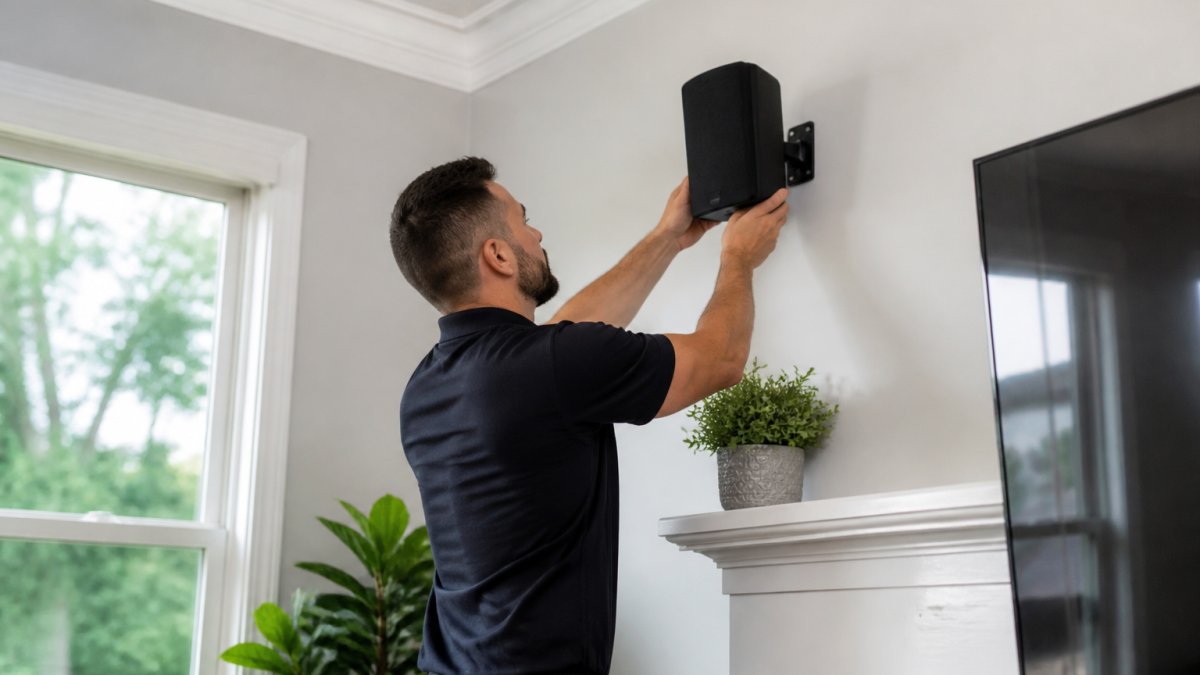
Proper stereo placement requires understanding how sound behaves in your room.
Cable runs matter more than people expect.
Amplification is where many budget systems fail. A quality amplifier with enough power (typically 50-100 watts per channel) controls the speakers properly.
Multi-room systems require network infrastructure planning.
This is exactly the kind of work Integrity Home Technologies specializes in.
Choosing a phantom sound alternative requires matching your listening priorities to the right system type.
Frequently Asked Questions
Which speakers are good alternatives to Devialet Phantom?
Several options compete in the premium wireless speaker space. The Bluesound PULSE 2i excels in high-resolution multi-room audio, while the Cambridge Audio Evo One offers value without compromising sound quality. For a complete stereo system, the KEF LS60 Wireless provides audiophile-grade performance. The choice depends on whether you prioritize a compact all-in-one speaker or a traditional stereo setup with better soundstage and imaging.
What should I compare when choosing a phantom sound alternative?
Focus on frequency response (especially bass extension and low-frequency performance), maximum output and loudness capability, wireless connectivity options, room size compatibility, and whether you need multi-room audio or a single-zone setup. Consider whether a sealed subwoofer pairing would enhance your listening experience, and evaluate stereo imaging and soundstage characteristics. Professional installation can optimize speaker placement and system configuration for your specific space.
Can a pair of speakers replace a single Devialet Phantom all-in-one speaker?
Yes, a stereo speaker system can often provide superior listening experience compared to a single compact speaker. Two speakers create better stereo imaging, wider soundstage, and more accurate center image. A traditional stereo system for home audio typically offers deeper bass response, controlled bass reproduction, and better midrange detail. However, setup requires more space and careful speaker placement, whereas an all-in-one speaker offers simplicity and convenience.
What is the difference between a whole-home audio system and a phantom sound alternative speaker?
A phantom sound alternative like the Devialet Phantom is a single, self-contained wireless speaker designed for one room. A whole-home audio system distributes audio across multiple rooms using networked speakers, allowing independent or synchronized playback in different zones. Whole-home systems require professional installation and structured cabling but provide flexibility, scalability, and the ability to stream different content or the same audio throughout your home.