 How-to
How Long Should Outdoor Deck Lighting Last
Table of Contents
- How Long Should Outdoor Deck Lighting Last
- How Long Do LED Outdoor Lights Last
- How Long Do Solar Deck Lights Last
- Factors That Affect Outdoor Lighting Lifespan
- Outdoor Lighting Maintenance to Extend Lifespan
- Weatherproof Deck Lights and Durability Standards
- Frequently Asked Questions
Last Updated: October 17, 2026
How Long Should Outdoor Deck Lighting Last
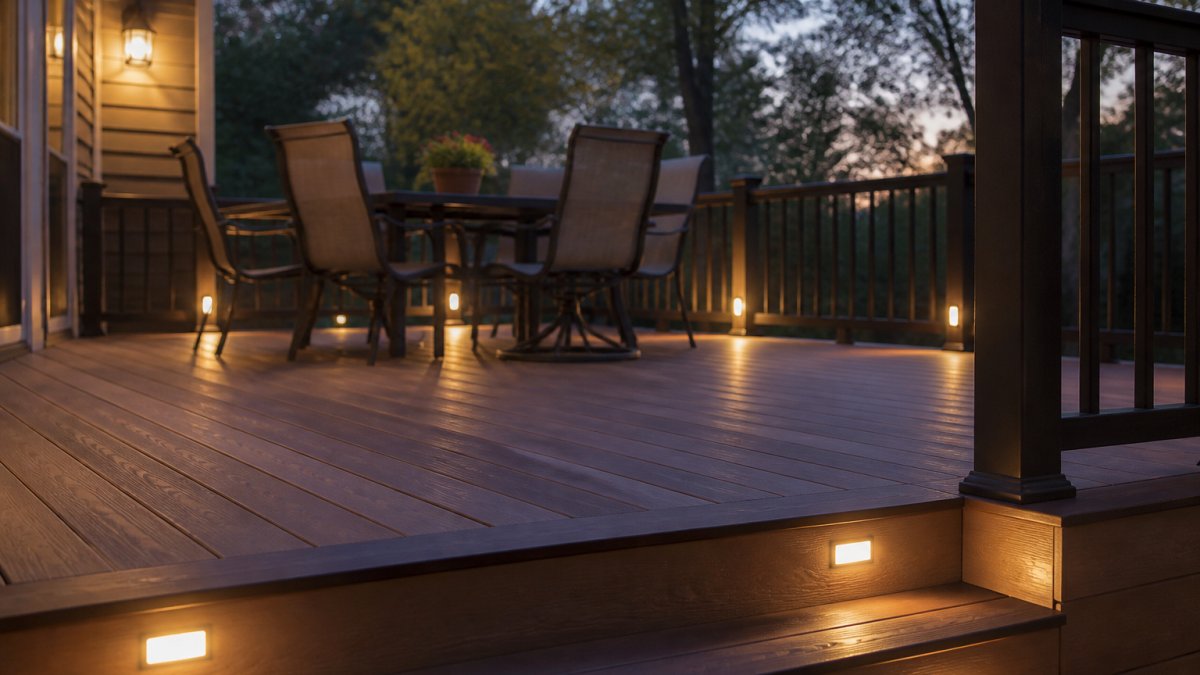
How long outdoor deck lighting last typically ranges between 3 to 10 years, depending on fixture type, installation quality, and maintenance.
A deck lighting system has bulbs, LED modules, fixtures, drivers, transformers, and sometimes batteries, each failing on its own timeline. When one component dies, you don't always need to replace the entire fixture.
At Integrity Home Technologies, we've installed many deck lighting systems.
Typical Lifespan Estimates
Most outdoor deck lighting fixtures are rated to last 25,000 to 50,000 operating hours, at 6 hours per night, 50,000 hours works out to roughly 23 years. But rated hours assume perfect conditions. Your deck has rain, snow, temperature swings, and salt air if you're near water.
Budget lighting might fail in 2 to 3 years. Premium professional-grade systems can push 15 years or more. The difference often comes down to material quality and how the system was installed.
Understanding Rated Hours vs. Real-World Years
Manufacturers print "50,000 hours" on LED bulbs and fixtures, but that number is tested in controlled labs, not on your deck. To convert rated hours to realistic years, divide rated hours (usually 25,000 to 100,000) by nightly usage (most homeowners run deck lights 5 to 8 hours) and by 365 days. Example: A 50,000-hour fixture used 6 hours per night = 23 years theoretical lifespan. Subtract 40% for real-world conditions, giving roughly 14 years.
How Long Do LED Outdoor Lights Last
LED fixtures dominate outdoor deck lighting because they run cooler, use less energy, and last significantly longer than incandescent or halogen options. But "LED" doesn't mean forever.
LED Rated Lifespan and Operating Hours
LED outdoor lights are typically rated between 25,000 and 100,000 operating hours, with most quality deck lighting in the 50,000-hour range. That number measures when light output drops to 70% of original brightness, the LED doesn't burn out suddenly, it dims gradually until it's no longer useful.
In practical terms:
- Budget LED fixtures: 25,000 to 35,000 hours (5 to 8 years typical use)
- Mid-range LED fixtures: 50,000 hours (10 to 15 years typical use)
- Professional-grade LED fixtures: 70,000 to 100,000 hours (15 to 25 years typical use)
The type of LED technology matters too. Chip-on-board LEDs (COB) tend to last longer than older LED types. They run cooler and handle temperature swings better.
Components Beyond the Bulb
The LED itself might last 15 years, but other parts fail first. A typical LED deck light system includes:
- LED module or bulb, lasts 25,000 to 100,000 hours
- Driver or power supply, lasts 5 to 10 years
- Fixture housing, lasts 10 to 15 years depending on material
- Wiring and connections, fails due to corrosion or moisture, typically 5 to 8 years
- Transformer (if hardwired), lasts 10 to 15 years
The driver is often the first component to fail. Heat and moisture degrade drivers faster than the LED itself. If your light flickers or dims inconsistently, the driver usually needs replacement, not the entire fixture.
How Long Do Solar Deck Lights Last
Solar deck lights need no wiring, just push them into the deck and they work. But solar systems have a different lifespan equation.
Solar Battery Degradation
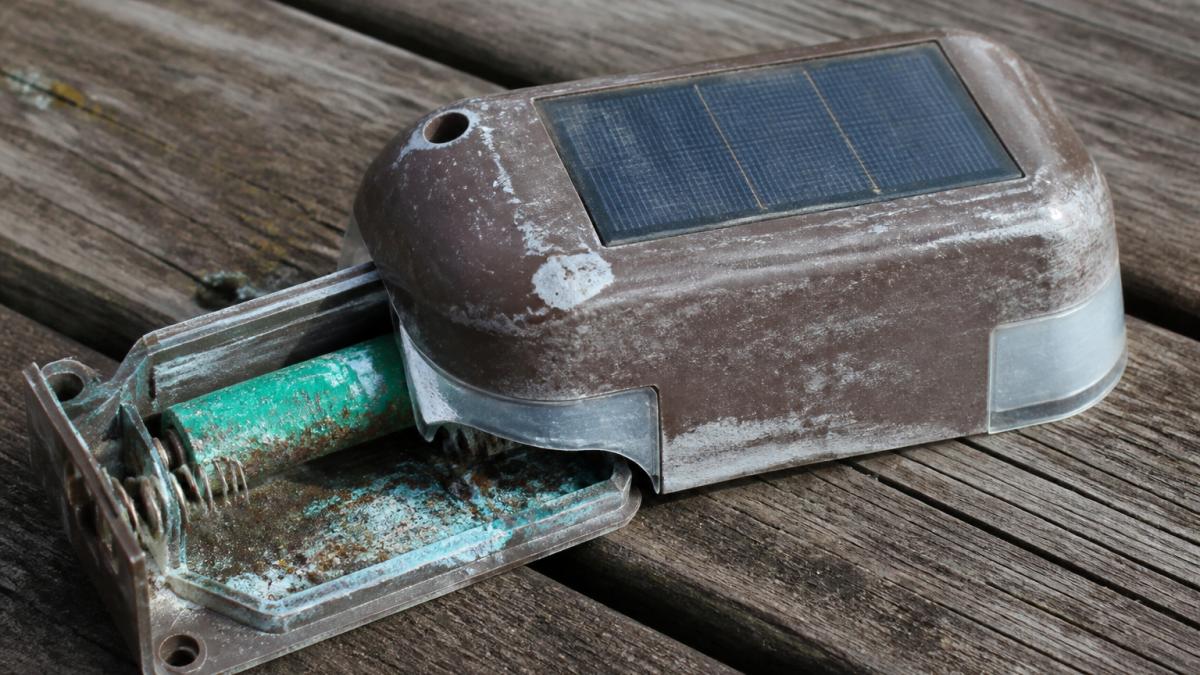
The LED in a solar light might last 50,000 hours. The battery rarely does. Solar deck lights use rechargeable batteries (usually NiMH or lithium-ion) that degrade with every charge cycle:
- Retains 80% capacity after year 1
- Drops to 60% capacity by year 2 or 3
- Becomes unreliable by year 3 to 4
In practice, solar deck lights work well for 2 to 3 years, then stop holding a full charge, they might still light up on bright days but fail on cloudy days or in winter. The battery is often the only replaceable part: replacing it costs $10 to $30 and extends life another 2 to 3 years, versus $40 to $100 for a new fixture.
Solar Panel and Fixture Durability
Solar panels degrade too, losing roughly 0.5% to 1% efficiency per year as dust, pollen, and oxidation build up, after 10 years, that's 5% to 10% less power than when new.
Real-world lifespan for solar deck lights:
- Budget solar lights: 2 to 3 years
- Mid-range solar lights: 3 to 5 years with battery replacement
- Premium solar lights: 5 to 8 years with battery replacement
Solar lights work best in supplemental roles (accent lighting, pathway markers). For primary deck lighting, hardwired LED systems are more reliable.
Factors That Affect Outdoor Lighting Lifespan
The difference between a light that lasts 3 years and one that lasts 15 years usually comes down to five things.
Weather Exposure and Moisture
Moisture is the enemy of outdoor lighting, it corrodes connections, degrades sealants, and causes electrical failures. Your deck faces constant moisture stress: rain, dew, humidity, salt spray, freeze-thaw cycles, and groundwater seeping up through the deck. Quality fixtures have sealed housings and gaskets; budget fixtures have gaps where moisture reaches the driver or connections. Corrosion accelerates in humid climates and near saltwater, in Northern Kentucky or Greater Cincinnati near rivers, moisture can cut fixture lifespan in half.
Heat Management and Thermal Stress
LEDs generate less heat than incandescent bulbs, but they still produce heat that has to go somewhere. Drivers are sensitive to it: every 10°C increase in operating temperature roughly cuts component lifespan in half, so a driver rated for 10 years at 50°C might last only 5 years at 70°C. Black fixtures absorb more heat, and fixtures recessed into solid deck material trap it.
Fixture and Material Quality
Material quality directly correlates to lifespan.
Budget fixtures use:
- Thin plastic housings (degrade in 2 to 3 years)
- Brass or steel connections (corrode quickly)
- Low-cost drivers (fail after 5 years)
Quality fixtures use:
- Aluminum or stainless steel housings (last 15+ years)
- Sealed stainless steel connections (resist corrosion)
- Industrial-grade drivers (rated 10+ years)
Stainless steel resists corrosion far better than brass or steel, aluminum is lightweight and durable if properly sealed, and plastic degrades quickly under UV. Weight usually signals quality: a heavy fixture suggests solid construction, while a light one often means thin materials and cheap components.
Installation Quality
Perfect fixtures fail if installed poorly, and poor fixtures might survive if installed well.
- Mounting fixtures upside down (water pools inside)
- Overtightening connections (damages seals)
- Using non-waterproof connectors (corrosion starts immediately)
- Burying fixtures in mulch or soil (traps moisture)
- Running wires through unprotected areas (UV and water damage)
Proper installation means fixtures mounted level and secure, connections sealed with waterproof compound, wires run in conduit or protected areas, adequate drainage, and no tight bends in wiring. At Integrity Home Technologies, we spend time getting these details right.
Outdoor Lighting Maintenance to Extend Lifespan
Maintenance doesn't make cheap lights last forever, but it adds years to quality fixtures and prevents early failures.
Routine Cleaning and Inspection
Dirt, pollen, and salt residue trap moisture and reduce light output. Clean fixtures twice per year (spring and fall):
- Turn off power at the breaker
- Wipe fixtures with a soft, dry cloth
- Use mild soap and water for stubborn residue
- Dry completely before restoring power
- Check seals and gaskets for cracks
Inspect connections annually for corrosion (white or green oxidation), loose connections, damaged seals, and condensation inside fixtures. Early detection prevents failures, a corroded connection can be cleaned or replaced before it causes a short.
Seasonal Maintenance Checklist
Different seasons bring different stresses. Adjust maintenance accordingly.
Spring:
- Clean all fixtures and lenses
- Inspect for winter damage
- Check for loose connections after freeze-thaw cycles
- Test all lights
Summer:
- Monitor for heat stress (fixtures running hot)
- Ensure adequate airflow around fixtures
- Check for UV damage to plastic components
- Verify no new corrosion has developed
Fall:
- Clean before winter weather arrives
- Inspect seals before rain and moisture increase
- Test backup systems if applicable
- Check wiring for damage or wear
Winter:
- Reduce inspection frequency (cold weather slows corrosion)
- Clear snow and ice away from fixtures
- Avoid pressure washing (forces water into seals)
When to Repair vs. Replace
Not every failure means replacing the fixture.
A single failed driver costs $15 to $30 to replace. A corroded connection can be re-sealed for $5 to $10 in materials. A cracked housing or failed LED module usually means replacing the entire fixture.
Weatherproof Deck Lights and Durability Standards
Not all outdoor fixtures are equally weatherproof. IP ratings help you compare.
IP Ratings and Weather Resistance
IP ratings measure how well a fixture resists dust and water ingress, using two digits.
First digit (dust resistance):
- IP5X = dust protected
- IP6X = completely dust-tight
Second digit (water resistance):
- IPX4 = splash-proof (basic outdoor use)
- IPX5 = water-jet-proof (moderate weather)
- IPX6 = powerful water-jet-proof (heavy rain and spray)
- IPX7 = immersion-proof to 1 meter (can survive brief submersion)
- IPX8 = submersion-proof (can survive extended underwater exposure)
For deck lighting, aim for IP67 minimum, dust-tight and immersion-proof to 1 meter. Most quality deck lights are IP67 or IP68. Budget fixtures might be IP44 or IP54, which don't provide enough protection where water pools and moisture is constant.
Warranty Coverage and What It Protects
Warranties tell you what the manufacturer believes about durability. A typical deck lighting warranty covers:
- Defective materials or workmanship, covers manufacturing flaws (usually 1 to 2 years)
- LED failure, covers premature LED burnout (usually 3 to 5 years)
- Does NOT cover, corrosion from improper installation, physical damage, UV degradation of plastic, battery degradation (solar lights)
Read warranties carefully, a 10-year fixture warranty might only cover the LED for 3 years and the driver for 1. Warranties don't cover the most common failure modes (corrosion, moisture damage, heat stress), so proper installation and maintenance prevent more failures than warranties ever cover.
Deck lighting should last years, not months. The difference between a 3-year light and a 15-year light usually comes down to material quality, installation care, and routine maintenance. When your deck lighting starts to fail, don't automatically assume you need new fixtures.
Frequently Asked Questions
How long do outdoor deck lighting fixtures typically last?
With proper installation and maintenance, outdoor deck lighting typically lasts 5-10 years. LED fixtures often last longer than older incandescent systems, sometimes reaching 10-15 years. However, individual components fail at different rates, LED bulbs may outlast their fixtures, while solar batteries degrade faster than the light housing itself. Warranty coverage and professional installation significantly extend overall system lifespan.
What's the difference between LED rated hours and how long outdoor lights actually last?
LED manufacturers rate bulbs in operating hours, commonly 25,000 to 50,000 hours. To convert this to years, divide by your average nightly use. If you run lights 6 hours per night, a 25,000-hour LED lasts roughly 11 years. However, rated lifespan assumes ideal conditions. Weather exposure, heat, moisture, and installation quality reduce real-world longevity. Professional installation and weatherproof fixtures help fixtures meet or exceed their rated lifespan.
How long do solar deck lights last compared to low-voltage lights?
Solar deck lights typically last 3-5 years before the rechargeable battery degrades significantly, though the fixture itself may last longer. Low-voltage LED deck lights usually last 8-12 years because they avoid battery degradation. The trade-off: solar lights require no wiring but face faster battery decline, especially in cold climates where battery chemistry weakens. Low-voltage systems need professional installation but deliver superior longevity and consistent brightness.
What maintenance helps deck lighting last longer?
Clean fixtures quarterly to remove dirt, pollen, and moisture buildup. Check for corrosion around connection points and seal gaps with weatherproof caulk. Inspect for loose fasteners and cracked lens covers. In winter, remove standing water and ice. Replace solar panel covers if they're cloudy. Test connections annually. Professional inspection every 2-3 years catches failing components early, preventing cascading failures. Proper maintenance can extend lifespan by 30-50%.