 Listicle
Best Outdoor Landscape Lighting for Winter: 7 Top Picks
Table of Contents
- Top 7 Outdoor Landscape Lighting Picks for Winter
- Integrity Home Technologies: Professional Winter Lighting Installation
- Kichler Landscape Lighting: Reliable Low Voltage LED Landscape Lighting
- Govee Outdoor Spot Lights: Smart Home Outdoor Lighting Control on a Budget
- VOLT Lighting: Brass Fixtures Built for Cold-Weather Durability
- FX Luminaire: Premium Smart Control for High-End Winter Displays
- Unique Lighting Systems: Heavy-Duty Optics for Snowy Landscapes
- Govee Outdoor Tree Lights: Winter Tree Wrapping Made Simple
- Winter Lighting Maintenance and Smart Scheduling Tips
- Frequently Asked Questions
Last Updated: September 30, 2026
Top 7 Outdoor Landscape Lighting Picks for Winter
Cold weather exposes weak fixtures fast. The best outdoor landscape lighting for winter is built around sealed housings, cold-rated batteries, and low-voltage systems that keep working when temperatures drop below freezing. This guide covers seven fixtures and systems we've evaluated for winter performance, from professional installations to smart DIY options. Below, we'll show you exactly what separates a fixture that survives January from one that quits in November.
Quick Picks:
- Best Overall: Integrity Home Technologies, professional design, installation, and winter-ready low-voltage systems
- Best Low Voltage LED: Kichler Landscape Lighting, reliable hardscape and path fixtures
- Best Smart Budget Option: Govee Outdoor Spot Lights, app control at an accessible price
- Best Cold-Weather Durability: VOLT Lighting, solid brass construction that resists corrosion
| Product | Best For | Key Winter Strength | Starting Price |
|---|---|---|---|
| Integrity Home Technologies | Full-service installation | Expert assessment, clean low-voltage work | Free estimate |
| Kichler | Low-voltage LED systems | Durable hardscape and deck fixtures | Contact for pricing |
| Govee Spot Lights | DIY smart lighting | App-controlled color, weather-resistant | $170 |
| VOLT Lighting | Long-term durability | Solid brass, corrosion resistance | Contact for pricing |
| FX Luminaire | Luxury properties | Smart control, architectural fixtures | Contact for pricing |
| Unique Lighting Systems | Large landscapes | Heavy-duty optics, snow-ready build | Contact for pricing |
| Govee Tree Lights | Winter tree wrapping | Flexible, weatherproof strips | $99.99 |
How We Evaluated These Winter-Ready Fixtures
We scored each option on five winter-specific criteria: fixture durability and corrosion resistance, cold-weather battery and transformer performance, IP rating and weatherproofing, smart control features, and installation complexity. A fixture that looks great in July but fails under frost and snow load doesn't make this list. We prioritized products with sealed connections, proven low-voltage architecture, and materials that hold up to freeze-thaw cycles.
Integrity Home Technologies: Professional Winter Lighting Installation
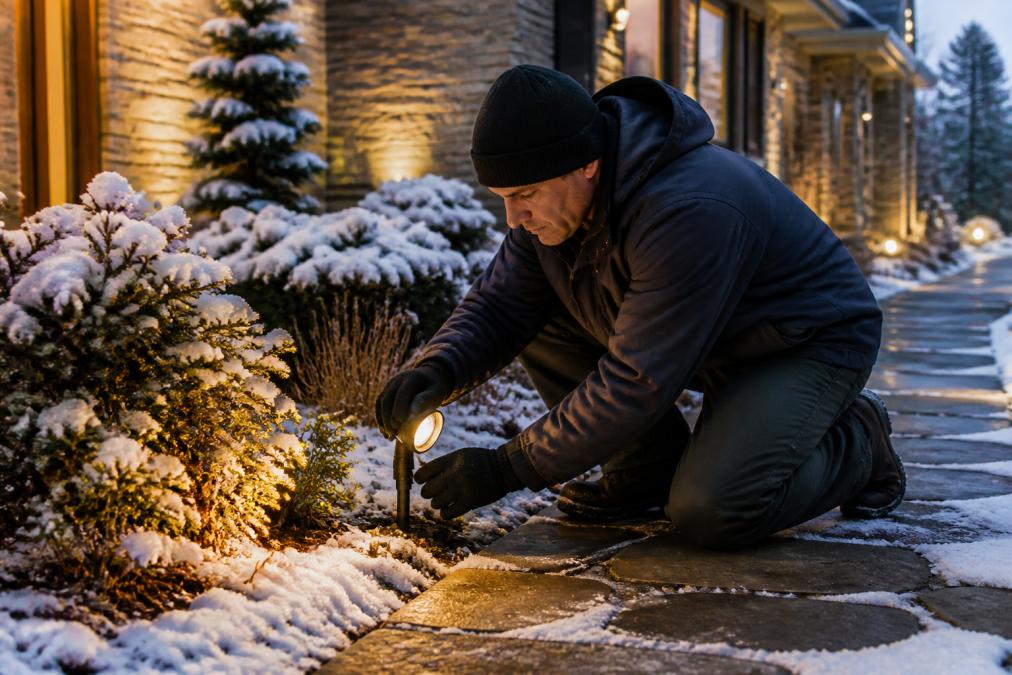
For homeowners who want winter lighting done right the first time, Integrity Home Technologies is our top pick. The locally owned team brings over 20 years of installation experience and specializes in low-voltage and smart home work, which matters when you're running wiring through frozen or snow-covered ground.
Pros:
- 20+ years of installation experience
- Free expert assessment of project needs
- Specialized low-voltage and smart home focus
- Locally owned with honest, affordable pricing
Cons:
- Service area limited to the Greater Cincinnati and Northern Kentucky region
Kichler Landscape Lighting: Reliable Low Voltage LED Landscape Lighting
Kichler remains a dependable name in low-voltage LED landscape lighting, and its hardscape and deck fixtures handle winter well. The system design emphasizes energy efficiency, and the durable construction suits a range of weather conditions.
Pros:
- Wide variety of fixture styles
- High-quality build materials
- Energy-efficient low-voltage design
Cons:
- Requires professional installation or advanced DIY knowledge
Govee Outdoor Spot Lights: Smart Home Outdoor Lighting Control on a Budget
Govee's outdoor spot lights are the entry point for homeowners who want app-controlled color and scheduling without hiring an installer. Each light puts out 500 lumens, the kit is designed for ground staking or surface mounting, and the app handles color, brightness, grouping, and schedules from your phone.
What Works in Winter
The appeal in cold weather is scheduling flexibility. Because the lights are app-controlled, you can shift your on-time earlier as sunset moves up through the fall and winter without touching a physical timer. You can also build scenes, a warm white for everyday ambiance, a cooler white for security coverage, or a colored scene for holiday displays, and switch between them from inside the house.
The Winter Trade-Offs You Should Know
- Wi-Fi dependence. These lights rely on your home Wi-Fi network. If your outdoor signal is weak, common when the router is on the far side of the house, expect dropouts, especially when cold weather stresses the connection. A Wi-Fi extender or mesh node near the outdoor space solves most of this.
- No battery chemistry advantage. Because these are plug-in fixtures rather than battery-powered, they sidestep the sub-zero capacity loss that affects solar and battery fixtures. That's a genuine winter strength, as long as the outlet and cord are protected.
- Cord and outlet management. The power cord and any outdoor outlet need to be rated for wet locations and protected from snow accumulation. A cord buried under a snowbank is a cord you can't inspect.
- Not a replacement for architectural lighting. These are accent and effect lights. They won't match the beam control, color consistency, or longevity of a brass low-voltage system, and they aren't designed to be left in place for a decade.
Who These Are For
If you rent, if you want to test whether landscape lighting is worth investing in, or if your priority is holiday and seasonal color rather than permanent architectural lighting, Govee's spot lights are a sensible starting point. If your goal is a permanent winter lighting system that survives freeze-thaw cycles for years, a low-voltage wired system is the better long-term spend.
Pros:
- Easy to install with no wiring or transformer
- Highly customizable color and scheduling through the app
- Weather-resistant design suited to rain and snow
- Plug-in power avoids cold-weather battery capacity loss
Cons:
- Relies on Wi-Fi and app connectivity, which can be unreliable outdoors
- Cord and outlet need wet-location protection
- Not a substitute for architectural-grade low-voltage fixtures
VOLT Lighting: Brass Fixtures Built for Cold-Weather Durability
If longevity is your priority, VOLT Lighting's solid brass fixtures are the answer. Brass resists corrosion far better than aluminum, which is exactly what you want when fixtures sit through freeze-thaw cycles and road salt spray.
Pros:
- Superior build quality compared to aluminum
- Excellent warranty support
- Corrosion-resistant brass construction
Cons:
- Higher upfront cost than budget alternatives
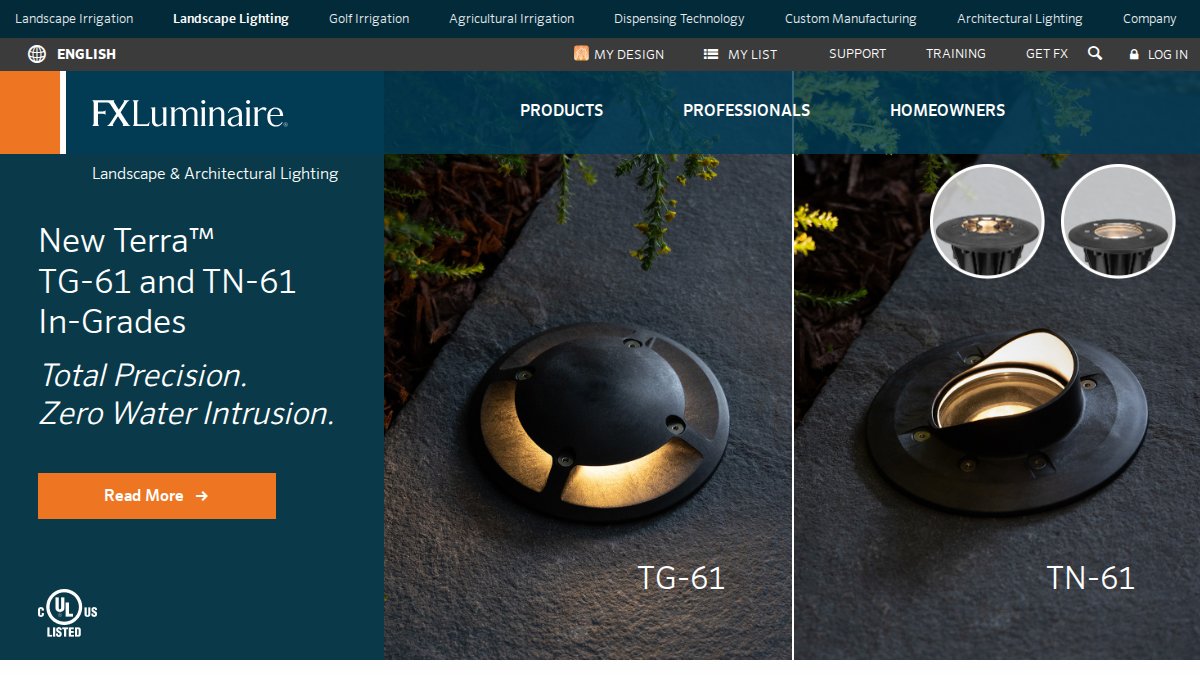
FX Luminaire: Premium Smart Control for High-End Winter Displays
FX Luminaire targets luxury properties with architectural-grade fixtures and integrated smart control. You can zone your lighting, dim individual fixtures, and build winter scenes without touching a transformer by hand.
Pros:
- Industry-leading smart features
- Professional-grade aesthetics
Cons:
- Premium price point
Unique Lighting Systems: Heavy-Duty Optics for Snowy Landscapes
Unique Lighting Systems builds fixtures for professionals who need precise light distribution across large properties. The heavy-duty construction and specialized optics keep beam spread controlled, so snow glare doesn't wash out your design.
Pros:
- Highly durable construction
- Specialized optics for precise distribution
- Trusted by landscape professionals
Cons:
- Can be expensive for small DIY projects
Govee Outdoor Tree Lights: Winter Tree Wrapping Made Simple
Wrapping bare trees is one of the fastest ways to add winter curb appeal, and Govee's tree lights make it simple. The flexible strips wrap around trunks and branches, and the weatherproof rating handles winter conditions.
Pros:
- Unique aesthetic effect
- Simple setup
- Smart app integration
Cons:
- Limited to specific tree-wrapping use cases
Winter Lighting Maintenance and Smart Scheduling Tips
Cold weather changes how a system performs, and most winter lighting failures trace back to three things: blocked light paths, stressed connections, and batteries that can't deliver rated capacity. The checklist below is built around those failure points rather than around generic seasonal upkeep.
Pre-Freeze Inspection (Do This Before the First Hard Freeze)
- Walk every run and confirm each fixture connection is hand-tight and seated in its gel-filled or silicone-filled wire nut. Loose connections are the most common cause of a mid-winter outage.
- Check the transformer tap setting against the total fixture load. Voltage drop gets worse as runs get longer, and a transformer that was marginal in July will underperform when the ground freezes and resistance climbs.
- Confirm the transformer is mounted above grade and under a cover. Transformers generate heat while running, and that heat melts snow into water that can refreeze around the enclosure and stress the housing.
- Inspect wiring insulation at every transition, where cable exits conduit, crosses a hardscape edge, or enters a fixture, for nicks that will wick moisture during freeze-thaw cycles.
- Photograph your existing fixture layout and transformer settings. When something fails in January, you'll want a baseline to compare against.
Snow, Ice, and Light Path Management
- Clear snow from fixture tops and from the face of any lens after each significant accumulation. A capped fixture doesn't just dim, it traps heat unevenly and can crack a lens when meltwater refreezes.
- Keep snowbanks below the beam path. A three-foot snowbank in front of a path light will throw glare back at the viewer instead of lighting the walkway.
- Don't chip ice off fixtures with a metal tool. Use a soft brush or let the fixture's own heat do the work.
- After an ice storm, check that uplights aimed at bare trees haven't shifted. Ice load on branches changes the geometry of the scene, and a fixture that was perfectly aimed in fall may now be lighting a branch instead of a trunk.
Battery Performance in Sub-Zero Temperatures
This is the part most winter lighting guides skip. Battery-powered and solar fixtures rely on lithium-ion or nickel-metal hydride (NiMH) cells, and both chemistries lose usable capacity as temperatures drop. Lithium-ion cells typically deliver noticeably less runtime below freezing, and NiMH cells are even more sensitive to cold. The result is a fixture that ran eight hours in October and quits after three in January, not because it's broken, but because the chemistry is working against you.
Practical responses:
- Bring removable rechargeable battery packs inside overnight during cold snaps and reinstall them in the morning.
- If a solar fixture is your only option in a shaded area, expect reduced winter output even on sunny days, because shorter daylight hours mean less charging time.
- For any fixture you depend on nightly, path lighting, security coverage, entry lighting, switch to a low-voltage wired system. Wired low-voltage runs don't depend on battery chemistry, and the transformer keeps delivering consistent voltage regardless of ambient temperature.
If you're deciding between solar and low-voltage for a winter-critical location, treat solar as a supplement and low-voltage as the primary. Solar works well in open, south-facing spots with full winter sun; it struggles everywhere else.
Smart Scheduling for Shorter Winter Days
The single biggest scheduling mistake is leaving a summer timer schedule in place through winter. Sunset arrives earlier and sunrise arrives later, so a fixed on/off time that worked in July will leave your lights off during the darkest part of the evening.
- Use a photocell or astronomical timer that tracks sunset and sunrise automatically rather than a fixed clock timer.
- If your system supports smart home integration, build a winter scene that triggers at sunset and runs until a set time, typically 11 p.m. to midnight for residential ambiance, or dusk-to-dawn for security coverage.
- Test your smart schedules remotely on the coldest nights. Wi-Fi and mesh signals can degrade in extreme cold, and a schedule that fails silently is worse than no schedule at all.
- Layer in a motion trigger for security fixtures so they run at low output by default and jump to full brightness on detection. That combination saves energy and gives you a visible response when something moves.
Winter maintenance isn't about doing more, it's about doing the right things before the ground freezes. Inspect connections, manage snow and ice, understand your battery chemistry, and let smart scheduling handle the shorter days.
Frequently Asked Questions
Do LED lights work in freezing temperatures?
Yes, LED lights operate in freezing temperatures, but performance varies by quality. Cheaper LEDs may dim or flicker below 14°F (-10°C). Look for fixtures rated for cold weather, like those from VOLT Lighting or Cast Lighting, which use solid brass or bronze construction and high-quality drivers. These maintain full brightness and color temperature even in sub-zero conditions, making them reliable for winter landscape lighting.
What is the best type of outdoor lighting for winter?
Low voltage LED landscape lighting is the best choice for winter. It uses a transformer to step down voltage, reducing energy waste and heat output, which helps prevent snow melt and ice dams. LEDs also last longer and use less power than halogen. For pathways, use warm white (2700K-3000K) fixtures with a high IP rating (IP65 or higher) to withstand snow and ice.
How does cold weather affect outdoor lighting performance?
Cold weather affects outdoor lighting in several ways. Battery-powered and solar lights lose capacity in freezing temperatures, often shutting down early. Low-voltage LED systems are less affected but may experience voltage drop over long wire runs. Fixtures with poor weatherproofing can crack or corrode. To avoid issues, choose fixtures with high IP ratings and consider a professional installation that accounts for voltage drop and snow load.
Should I choose low-voltage or solar lighting for winter?
Low-voltage lighting is more reliable for winter because it runs on grid power and isn't dependent on sunlight. Solar lights may not charge fully on short, cloudy winter days, leading to dim or no light. However, solar can work in mild climates with ample sun. For consistent winter performance, especially in areas with snow and ice, low-voltage LED systems from brands like Kichler or FX Luminaire are the better choice.
What are the best year-round outdoor lights?
The best year-round outdoor lights are durable, weather-resistant, and versatile. Solid brass or bronze fixtures like those from VOLT Lighting or Cast Lighting resist corrosion and last decades. Smart options like Govee or FX Luminaire let you adjust color and schedules for holidays or daily use. For year-round reliability, prioritize fixtures with high IP ratings, warm white LEDs, and a warranty of at least 5 years.
Winter doesn't have to mean dark, unreliable outdoor lighting. If you want a system designed, installed, and maintained to handle cold weather without constant fixes, Integrity Home Technologies delivers expert assessment at no cost, over 20 years of low-voltage installation experience, and clean, careful work backed by a 5.0 rating across 41+ Google reviews. Get a free estimate from Integrity Home Technologies and light your landscape with confidence all winter long.