 blog
blog
Best Holiday Lighting Installation 2026: What to Know
Table of Contents
- What the Best Holiday Lighting Installation Looks Like in 2026
- Professional Christmas Light Installation Trends 2026
- Permanent Holiday Lighting Cost: What Drives the Price
- Smart Home Outdoor Lighting Integration
- How to Vet a Holiday Lighting Installer
- DIY vs. Professional Installation: The Real ROI
- Maintenance, Removal, and Sustainable Disposal
- Frequently Asked Questions
Last Updated: September 22, 2026
What the Best Holiday Lighting Installation Looks Like in 2026
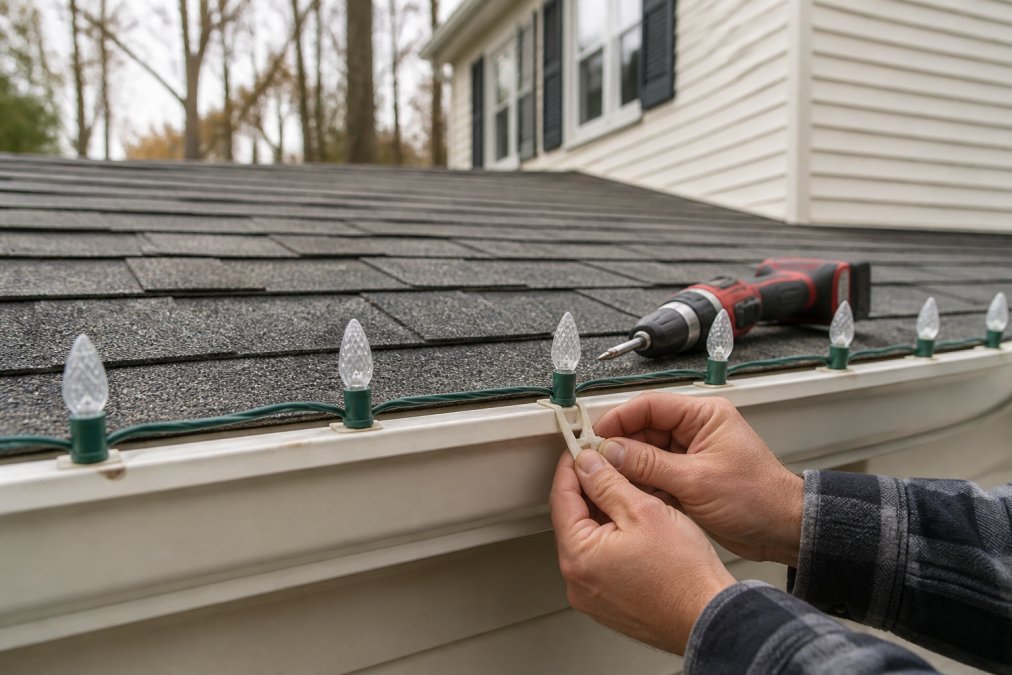
The best holiday lighting installation in 2026 pairs energy-efficient LED hardware with smart controls, professional design, and a maintenance plan that lasts past New Year's. At Integrity Home Technologies, we've spent more than 20 years wiring homes, and the biggest shift we've seen is this: homeowners now want lighting that works harder and lasts longer than a single season.
Professional Christmas Light Installation Trends 2026
Professional Christmas light installation trends in 2026 lean toward color-changing LEDs, animated effects, and designs that stay up year-round. The shift is away from one-and-done string lights and toward systems you control from your phone.
RGB Color-Changing LEDs and Animated Displays
RGB color-changing LEDs let one fixture produce any color, so you can run warm white in December, red for a game day, and soft amber in summer without swapping a single bulb. Animated displays take that further, sequencing lights to music or a schedule. Many businesses find the flexibility alone justifies the higher upfront cost.
Projection Mapping and Vintage-Style C7 Bulbs
Projection mapping throws patterns onto walls and garages, cutting the number of physical fixtures you need. At the same time, vintage-style C7 bulbs are back in demand for their warm, nostalgic glow. The result is a mix: modern tech for coverage, classic bulbs for character.
Permanent Holiday Lighting Cost: What Drives the Price
Permanent holiday lighting cost depends on linear footage, fixture quality, roof complexity, and whether the system ties into smart controls. There is no single number, and any installer who quotes one over the phone is guessing.
What moves the total most:
- Roofline length and pitch: Steep, multi-gable roofs take longer and need more safety gear.
- Fixture grade: Commercial-grade materials cost more but survive years of weather.
- Control system: Automated timers and smart home integration add hardware and setup.
- Electrical load capacity: Older panels may need an assessment before adding circuits.
Temporary vs. Permanent: Which Fits Your Budget
Temporary lighting costs less upfront but repeats every year. Permanent outdoor lighting costs more initially and then pays back over several seasons of reuse. If you plan to decorate for more than three years, permanent systems usually win on total spend. If you're renting or testing a look, temporary is the safer call.
| Option | Upfront Cost | Reuse | Best For |
|---|---|---|---|
| Temporary string lights | Lower | One season | Renters, one-time displays |
| Permanent LED system | Higher | Year-round | Long-term homeowners |
| Hybrid (permanent base + seasonal accents) | Moderate | Mixed | Flexible decorators |
Smart Home Outdoor Lighting Integration
Smart home outdoor lighting integration connects your holiday display to the same app or hub that runs your indoor lights, cameras, and audio. That means one schedule for everything and no more crawling behind bushes to reset a timer. The catch is that "smart" is not one standard, it's several, and they don't all talk to each other.
The Protocols You'll Actually Encounter
Most 2026 residential lighting systems communicate over one of these:
- Wi-Fi (2.4 GHz): Easiest setup, no hub required, but the 2.4 GHz band gets crowded fast. A 200-foot roofline with 30 fixtures on Wi-Fi can drop commands or lag behind music.
- Bluetooth mesh: Good for a single tree or a small yard. Range tops out quickly, so it rarely covers a full home exterior.
- Zigbee and Z-Wave: Require a hub but handle dozens of nodes reliably and extend range through mesh routing. Common in permanent systems that stay up year-round.
- Proprietary RF: Many permanent lighting brands use their own radio and app. Reliable, but you're locked into that brand's ecosystem for future additions.
- Wired DMX or E1.31: The standard for animated, music-synced commercial displays. Rock-solid, but needs a controller and low-voltage wiring run.
What to Ask Before You Sign
Compatibility issues are far cheaper to solve on paper than on a ladder. Ask your installer:
- Which protocol does the system use, and does it require a hub?
- Will it integrate with Amazon Alexa, Google Home, or Apple Home, or only the manufacturer's app?
- Can I control color, brightness, and schedules per zone, or only as one group?
- What happens to my schedules if the internet goes down, do they run locally or fail?
- If I add fixtures next year, will they join the same network?
Automation Features Worth Paying For
- Sunrise/sunset triggers so lights come on with dusk and off at a set hour without manual changes as days shorten.
- Scene presets saved per holiday, warm white for December, red and green for game days, amber for fall.
- Vacation mode that randomizes on/off timing so an empty house doesn't look empty.
- Camera and doorbell triggers that flash a porch zone when motion is detected.
- Energy monitoring that shows draw per zone so you can spot a failing strand before it trips a breaker.
Where Integration Quietly Costs More
Smart features add hardware, controllers, hubs, repeaters, and setup labor. A basic timer costs a fraction of a full app-controlled system. The honest question is whether you'll actually change colors and schedules more than a few times a season. If not, a quality astronomical timer gets you 80% of the benefit for a small share of the cost.
How to Vet a Holiday Lighting Installer
The best way to vet a holiday lighting installer is to check licensing, insurance, and real reviews, then ask how they handle safety and cleanup. A five-minute conversation separates professionals from seasonal crews.
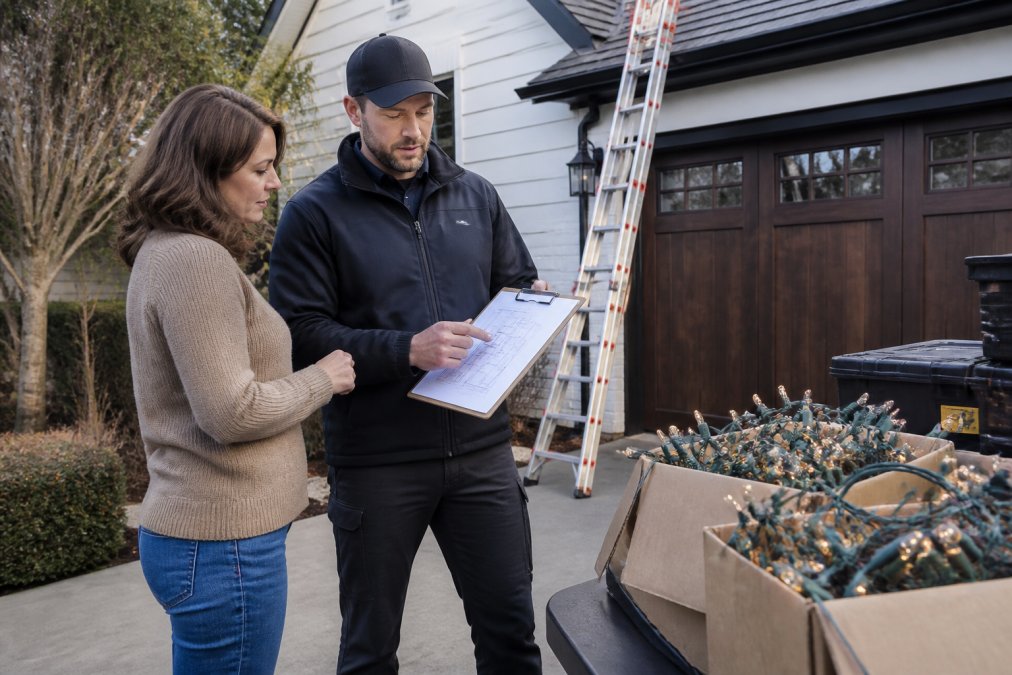
Ask every candidate these questions:
- Are you insured, and can you show proof?
- Who handles the wiring, and are they qualified for low-voltage work?
- What happens if a strand fails mid-season?
- Do you remove and store the lights, or is that extra?
- Can you show recent local work?
HOA and Municipal Compliance Before You Book
HOA and municipal rules can block a display you've already paid for. Many associations cap light height, ban certain colors, or set quiet hours for animated displays. Some towns restrict when decorations can go up.
DIY vs. Professional Installation: The Real ROI
DIY saves labor costs but adds real risks: ladder falls, overloaded circuits, and fixtures that fail in the first hard freeze. Professional installation services shift that risk to an insured crew and usually finish in a fraction of the time.
Maintenance, Removal, and Sustainable Disposal
Full-service maintenance and seasonal decor removal are where cheap installs quietly fall apart. Ask upfront who fixes a dead section in week two and who takes everything down in January. But the part almost no guide covers is what happens to the lights after they stop working, and that's where a little planning pays off.
What a Real Maintenance Contract Includes
A solid agreement typically covers:
- Mid-season troubleshooting visits, usually one or two scheduled check-ins, plus on-call response for outages.
- Replacement of failed strands or fixtures at no extra labor cost, with materials billed or bundled.
- Safe removal after the season, including clips, stakes, and extension cords.
- Storage in labeled, climate-controlled bins, or return of the lights to you organized by section.
- End-of-life handling for fixtures that fail permanently.
Get the response window in writing. "We'll get to it" is not a service level. A 48-hour response for a mid-season outage is a reasonable benchmark; anything longer means your display could sit dark through the peak weeks.
Why Holiday Light Disposal Is a Real Problem
String lights are not recyclable in curbside bins. They're a tangle of copper wire, PVC or rubber insulation, and small electronic components, and many older strands still contain lead in the solder and PVC jacketing. When they go in the trash, that material ends up in a landfill rather than being recovered.
How to Handle Old Strands the Right Way
- Test before you toss. Many "dead" strands have one bad bulb or a blown fuse. A cheap light tester and a pack of replacement fuses can revive a strand in minutes.
- Don't bin them. Check your municipal waste department's site for e-waste drop-off locations or seasonal collection events.
- Ask your installer. Full-service companies increasingly offer take-back programs, either recycling strands themselves or routing them to a certified e-waste handler. Ask before you book, not after.
- Retail take-back. Some national retailers run seasonal light recycling drives in January. Availability varies by store, so call ahead.
- Store, don't replace. Sealed, labeled bins and a photographed layout cut next season's reinstall time roughly in half and keep working strands out of the waste stream.
The Long-Term Math
Permanent LED systems change the disposal equation. Instead of replacing strands every year or two, you're maintaining one system for a decade or more. That means less packaging, fewer replacements, and a single end-of-life event instead of an annual one. If sustainability is part of your decision, ask your installer how long the fixtures are rated to last and what their take-back process looks like when the system finally does come down.
Frequently Asked Questions
How much should I pay someone to put up Christmas lights?
There is no single rate. Pricing depends on your roofline length, number of stories, whether you supply the lights, and whether removal and storage are included. A one-story ranch with a simple roofline costs far less than a two-story home with landscape illumination and multiple trees. Ask for an itemized quote that separates installation, materials, maintenance, and takedown so you can compare offers fairly. Get at least three quotes from licensed, insured local installers before you book.
What is the average cost to have permanent holiday lights installed?
Permanent holiday lighting costs more upfront than temporary strands because the fixtures are commercial-grade, weather-resistant, and wired into your home. The total depends on linear feet covered, whether the system is RGB color-changing or single-color, and how much low-voltage wiring and electrical load capacity work is needed. Rather than guess, request a free on-site assessment. A pro can measure your rooflines and give you a real number instead of a phone estimate.
When is the best time to book professional holiday lighting installation?
Book in late summer or early fall. Installers fill their schedules fast once October hits, and the best crews are booked solid by November. Booking early also lets you lock in your preferred installation window before the first freeze, which matters for roofline work and low-voltage wiring. If you want a specific design or smart lighting package, start the conversation even sooner so there is time to order fixtures.
Are permanent holiday lights worth the investment?
They can be, if you plan to decorate every year and want to skip the ladder. Permanent systems use weather-resistant fixtures and RGB color-changing LEDs you control from an app, so you can switch colors for holidays, game days, or everyday architectural accent lighting. The upfront cost is higher than temporary strands, but you avoid annual installation fees, tangled cords, and replacement bulbs. Ask your installer how long the fixtures are rated to last before deciding.
Decorating for the holidays should feel festive, not stressful. The right partner handles the design, the safety, and the takedown so you can actually enjoy the display. Integrity Home Technologies brings over 20 years of installation experience, free project assessments, and clean, careful work to every job, from low-voltage wiring to smart lighting integration. Get started with Integrity Home Technologies and get a free estimate for a holiday lighting setup built to last.